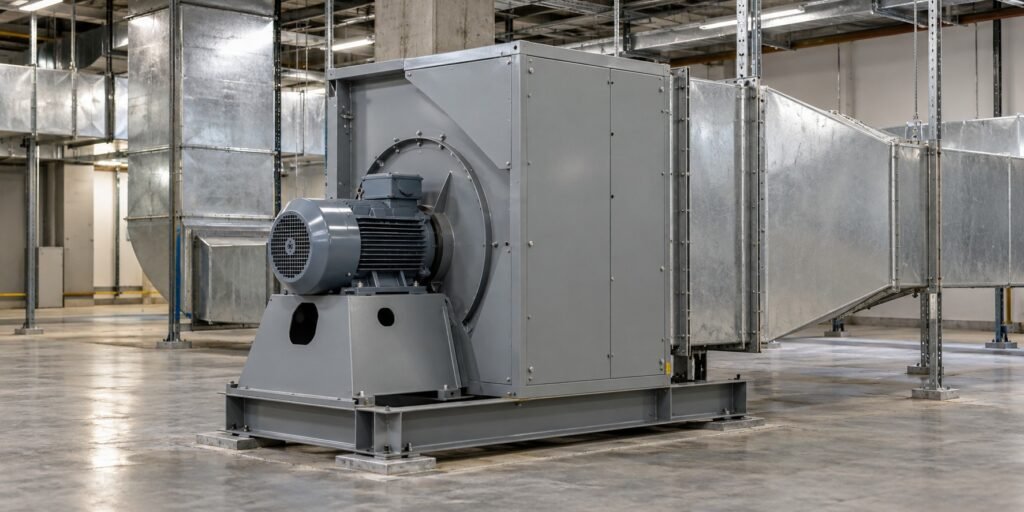

Fire Smoke Exhaust Fan Procurement Checklist: What to Confirm Before Ordering
Short answer: Before ordering a fire smoke exhaust fan, confirm the project duty point, the model-specific temperature and duration evidence, the mechanical and electrical interfaces, and the required commissioning documents. A fan is one component of a smoke-control system; its selection and acceptance should follow the approved project design and the requirements of the authority having jurisdiction.
NFPA describes NFPA 92 as covering the design, installation, and testing of smoke-control systems. That is why a quotation should be checked against the system documents, rather than judged by a headline airflow or temperature number alone.
1. Start with the approved smoke-control duty
Ask the project engineer or system designer for the approved submittal criteria before requesting a model. Confirm which smoke zone or application the fan serves, the required airflow and static pressure at the fan, the operating mode, and whether the fan is intended for smoke exhaust, pressurization, or another defined duty. Also confirm the required emergency operating temperature and duration, the normal ventilation duty if the same fan has one, and any duty/standby arrangement.
These values belong to the project design. Do not estimate them from building area or substitute a free-air rating for the specified operating point. If the design information is incomplete, request clarification before final model selection.
2. Request documents for the exact fan model
A supplier should identify the proposed model and configuration on the submittal. Request the fan curve or selection sheet showing the stated airflow, pressure, speed, and power at the required duty point, together with the test basis and the applicable technical documents. The model name, size, impeller, motor, drive arrangement, accessories, and offered configuration should be traceable across the quotation, drawing, and test records.
If a certification or listing is required, ask for the document that identifies the exact product line and model, then verify it in the issuing organization’s directory where available. AMCA explains that testing and certification are different: a test result by itself does not mean a product is enrolled in its Certified Ratings Program. Do not infer an AMCA certification, local approval, or code compliance from a logo, a broad product category, or a supplier’s general statement.
3. Check temperature rating and test duration separately
For smoke-duty equipment, confirm the stated emergency temperature and the duration at that temperature. Ask whether the evidence applies to the complete offered assembly and operating arrangement, including the fan, motor position, drive, and any required accessories. Separately record the normal ventilation temperature range if the unit will also operate outside emergency mode.
Do not treat “high-temperature,” “fire-rated,” or a series-level description as proof for every size or configuration. The acceptable rating and evidence depend on the project specification and applicable local requirements. Have the project engineer or authority confirm that the submitted documents meet those requirements.
4. Confirm the mechanical and installation interfaces
Check the approved drawing against the available plant-room or roof space. Confirm overall dimensions, weight, inlet and outlet orientation, rotation, connection size, support and anchor details, access for inspection, and the positions of any dampers or flexible connections. Confirm that the duct and discharge arrangement shown in the project documents matches the offered fan configuration.
These checks help prevent a technically suitable fan from arriving with an incompatible connection or an inaccessible service side. Ask the supplier to mark any deviation on the submittal rather than leaving it implicit in a quotation.
5. Match the electrical supply and control sequence
Verify the required voltage, phase, frequency, motor rating, starting method, and any specified variable-speed equipment. Then confirm the project’s control sequence: normal operation, fire-mode command, emergency power source where specified, status feedback, alarms, and any duty/standby changeover. The fire-alarm and smoke-control designer should approve the interface and sequence; a fan quotation alone cannot define the building’s life-safety controls.
6. Include commissioning and maintenance information
Before purchase, agree which documents will be supplied for installation and handover: approved shop drawings, operating and maintenance instructions, wiring and control information, test records, and a list of inspection and service points. The project team should plan how the installed system will be functionally tested and documented under the applicable design and local acceptance process. NFPA 92’s scope includes testing as well as design and installation.
Fire smoke exhaust fan procurement checklist
- Approved airflow and static-pressure duty point
- Smoke-control mode, temperature, and required duration
- Model-specific fan curve, test basis, and required certificates or listings
- Dimensions, weight, orientation, connections, supports, and service access
- Electrical supply and the approved fire-mode control sequence
- Commissioning, operation, and maintenance documents
- Written list of deviations from the project specification
Frequently asked questions
Is a high-temperature fan automatically suitable for smoke control?
No. The project must define the required duty and evidence. Confirm the model-specific temperature and duration, operating point, configuration, controls, and approvals required for that project.
Can I select a fan using airflow alone?
No. The fan must meet the specified airflow at the required pressure and configuration. The project submittal should identify the duty point and supporting performance information.
Does a test report mean a fan is certified?
Not necessarily. Certification programs have their own product scope, review, directory, and surveillance requirements. Check the issuing organization’s documentation and directory when a certification is required.
What should I send a manufacturer to request a quotation?
Send the approved duty point, temperature and duration, installation drawing or available dimensions, required fan arrangement, electrical supply, control sequence, and the project’s document or approval requirements. If some values are still being finalized, identify them as pending instead of guessing.
Explore POPULA FAN fire and smoke exhaust products
Review the Fire & Safety Ventilation product range, including the HKF centrifugal fire exhaust fan and the HTF A-type axial-flow fire exhaust fan. Product suitability should be confirmed against the approved project duty and its documentation.
References
- NFPA: Smoke Control Systems — overview noting NFPA 92 covers smoke-control system design, installation, and testing.
- AMCA: Certification and Testing — explains independent performance testing, the Certified Ratings Program, and the difference between testing and certification.
This checklist is general procurement guidance, not a substitute for the project’s approved design, local code review, or direction from the authority having jurisdiction.