

ASHRAE 7月草案:半導体製造施設の試運転に関する要点
POPULA fan semiconductor support ventilation planning is gaining relevance as facility teams focus more closely on how complex production buildings are commissioned and maintained. On July 17, 2026, ASHRAE opened a public-review draft for Guideline 1.7P, covering application of the commissioning process to semiconductor fabrication facilities. The draft is not a final standard, but its appearance reflects a wider industry need: ventilation, controls and maintenance documentation must continue to work together after a high-tech facility moves from design to daily operation.
Semiconductor sites contain many different environments, each with its own requirements. Cleanrooms, process exhaust, chemical handling and contamination-control systems require specialist engineering, dedicated equipment and strict project-specific review. Alongside them are non-cleanroom support areas—such as utility rooms, mechanical galleries, loading zones, service corridors and general equipment spaces—where practical airflow, heat removal, access and maintenance still matter. These support zones should not be treated as an afterthought simply because they are outside the production cleanroom.
ポピュラ views POPULA fan semiconductor support ventilation as a planning topic for suitable general industrial applications, rather than a one-size-fits-all product claim. The aim is to help project teams think clearly about where air enters, where it is exhausted, whether access is available for inspection, and how changes in operation can be checked without disrupting the wider facility.
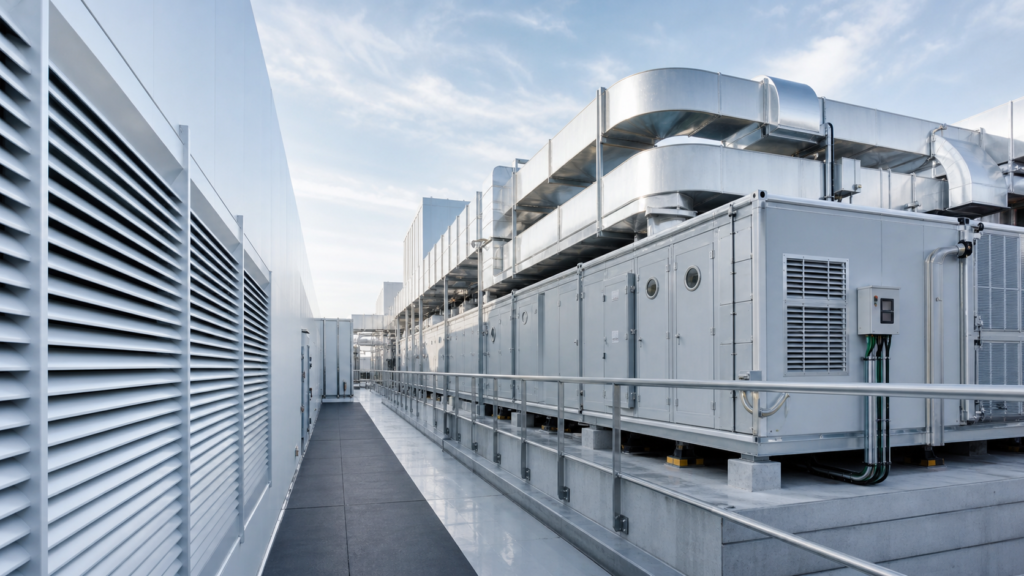
POPULA fan semiconductor support ventilation for non-cleanroom areas
In utility and support spaces, ventilation equipment may need to manage equipment heat, maintain a defined air path, control general odor or humidity, and keep mechanical areas serviceable. The relevant questions are practical: Is fresh air reaching the intended zone? Is exhaust discharge located to avoid recirculation? Are louvers, ducts and fan inlets accessible? Can the maintenance team isolate and inspect equipment safely? A fan that is correctly sized on paper can still perform poorly when the final duct route, access doors or operating sequence differ from the original plan.
For general air movement in appropriate non-hazardous support areas, fan selection should be based on required airflow, static pressure, installation location, sound expectations, available power and maintenance access. Axial fans may be suitable for direct wall or roof exhaust with low system resistance; centrifugal fans may be more suitable where ductwork and pressure loss are higher. The choice must follow the actual system duty and the project engineer’s requirements—not the assumption that all semiconductor-related spaces need the same type of equipment.
Where chemical vapors, corrosive gases, flammable atmospheres, process dust, cleanroom contamination-control requirements or emergency smoke-control duties are present, general ventilation fan selection is not enough. Those systems need dedicated hazard assessment, applicable code compliance and equipment verified for the specific duty. Keeping these boundaries clear is essential for a responsible industrial ventilation plan.
Why commissioning and documentation matter after installation
Commissioning is the bridge between a ventilation drawing and a working building. After installation, teams can verify that fans rotate correctly, dampers respond as intended, duct paths are clear, controls match operating schedules and access panels can actually be reached. Observing performance at normal operating conditions is important, because temporary commissioning settings or full-load tests do not always represent how a building runs during routine shifts.
Useful records include the selected fan model, rated duty point, wiring and control information, damper locations, access requirements, maintenance intervals and any field observations about vibration, noise or airflow. These records make later troubleshooting more efficient when room use, equipment loads or duct branches change. They also help different contractors and facility teams work from the same operational assumptions.
POPULAの産業用換気ソリューション can support fan application discussion, model selection and layout-oriented planning for suitable industrial support areas. A careful POPULA fan semiconductor support ventilation approach keeps airflow route, serviceability and operating conditions visible from the start, while leaving cleanroom, process-exhaust and hazardous-duty decisions to the specialised systems and engineering review they require.