

Warehouse Loading Dock Ventilation Project for Summer Heat Removal and Airflow Balance

Warehouse loading dock ventilation was required for a busy storage and packing area where open-and-close loading doors, pallet storage and vehicle movement created uneven summer conditions. Heat accumulated beneath the high roof while the deeper working zones could feel still, especially when the dock operated at changing intervals throughout the day. POPULA proposed a layered approach: high-level distributed exhaust, low-level make-up air and supplementary air circulation, rather than treating the warehouse as one uniform space.

The project objective was to establish a more deliberate airflow path across the loading and storage zones. The final airflow duty, equipment quantity and mounting positions must be confirmed from the warehouse dimensions, heat sources, opening conditions, occupancy and local requirements.
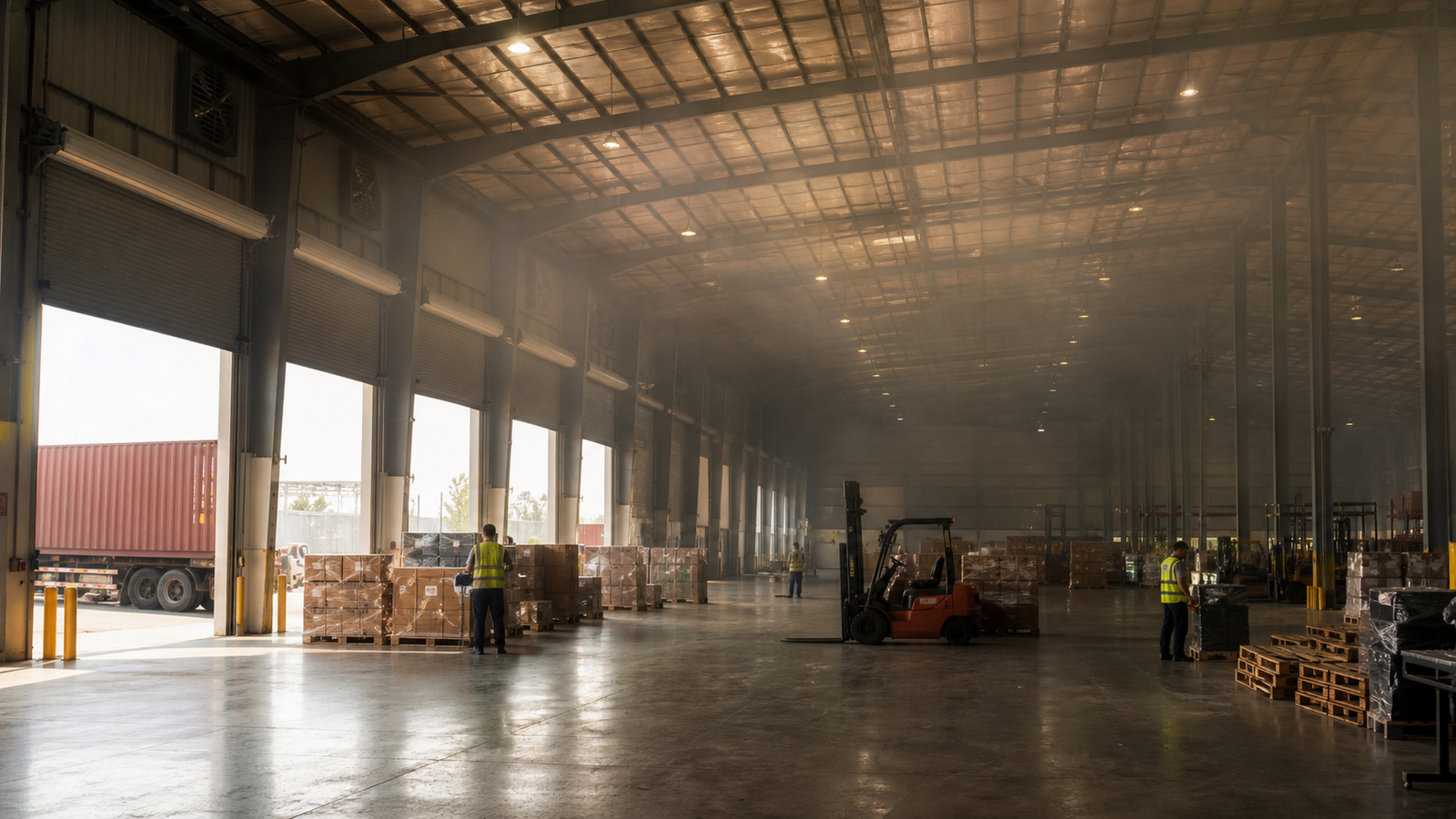
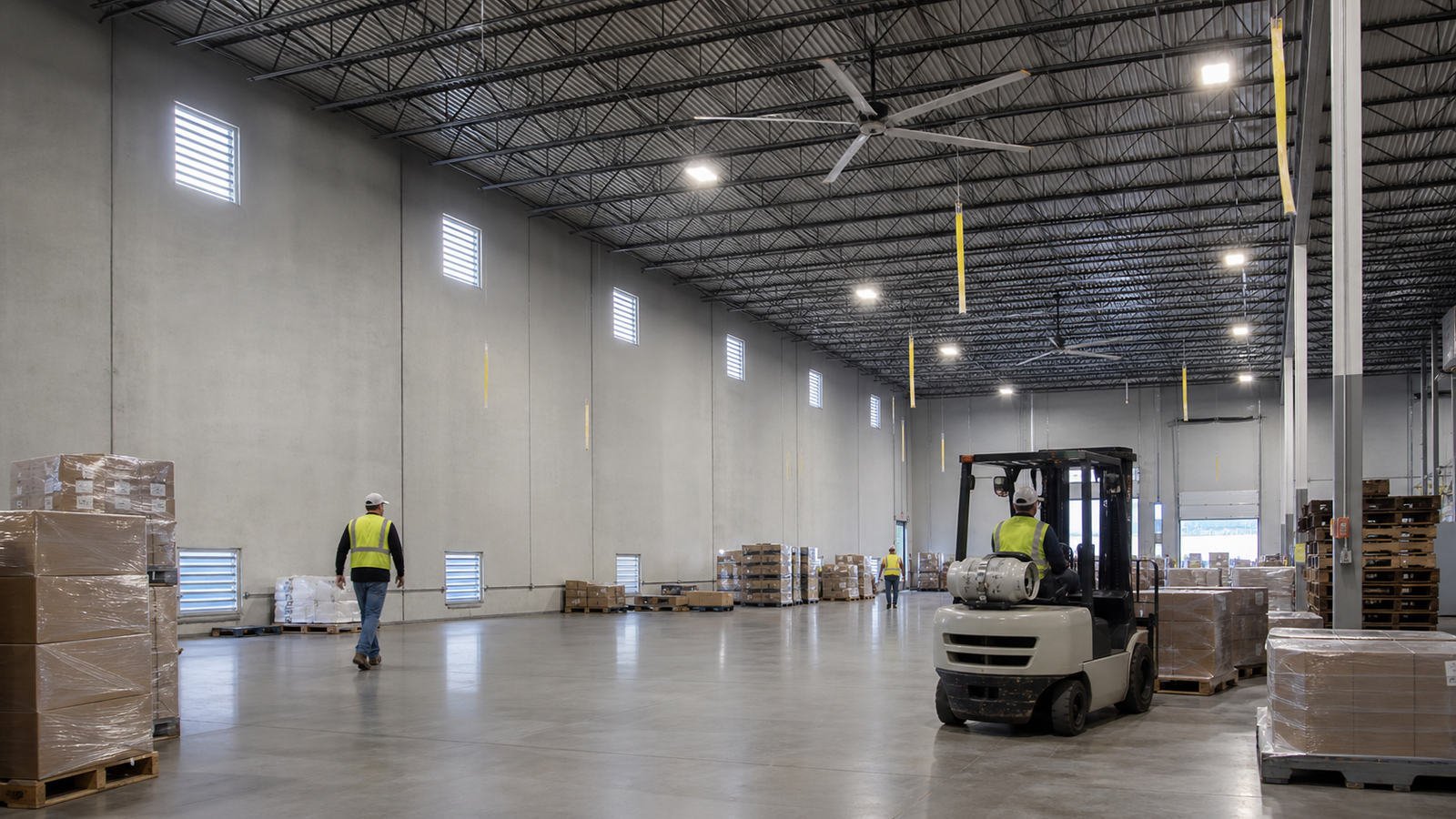
Warehouse loading dock heat buildup and stagnant air ventilation problem
Problem scene: heat can collect under a high roof while the deeper loading and storage zones receive limited air movement.

Warehouse Loading Dock Ventilation for Heat Removal and Airflow Coverage

Loading docks present a different ventilation challenge from a sealed process room. Door positions, delivery schedules and stacking arrangements can all change the available air path. A practical design considers where warmer air naturally rises, where fresh air can enter without creating an uncomfortable direct draft, and which areas may be shielded by racking, stored goods or building structure.

Why Combine JS Exhaust Fans, SF(G) Axial Fans and DFS Ceiling Fans

JS square exhaust fans are suited to distributed high-level exhaust positions where a large warehouse needs multiple extraction points rather than one concentrated outlet. The selected configuration should be verified for the actual installation environment and temperature conditions. On the opposite side, SF(G) axial fans can support low-level make-up air to establish a directional replacement-air path. DFS industrial ceiling fans are used as a supplementary circulation layer: their purpose is to gently mix air across occupied zones and reduce local dead spots, not to replace the required exhaust and make-up-air calculation.

How the Layout Creates a More Orderly Air Path

The proposed arrangement places distributed exhaust points at high level where heat tends to collect. Low-level supply openings on the opposing side provide a replacement-air route across the warehouse, while ceiling-mounted circulation fans help carry this movement through the middle of the space. Exact spacing must allow for roof structure, lighting, sprinkler clearances, lifting routes and maintenance access. During commissioning, each zone should be checked under representative dock-door and production conditions so adjustments are based on the real operating state.

Warehouse loading dock ventilation layout with high exhaust and low fresh air
Solution concept: high-level extraction, low-level make-up air and gentle circulation help organize air movement across the warehouse.

Practical Value for Warehouse Operations

By separating exhaust, replacement air and circulation into coordinated layers, a warehouse team has a clearer framework for reviewing thermal comfort and air movement as the layout changes. The approach supports staged adjustment and maintenance: exhaust points, supply locations and circulation equipment can each be inspected as part of routine facility checks. It does not remove the need for project-specific airflow calculation, fire and safety coordination, or validation after installation.

POPULA supports warehouse and industrial projects with application-focused fan options and ventilation planning discussions. Explore Penyelesaian pengudaraan perindustrian POPULA or visit the POPULA Fan homepage to discuss a suitable high-exhaust, low-supply and circulation strategy for your facility.