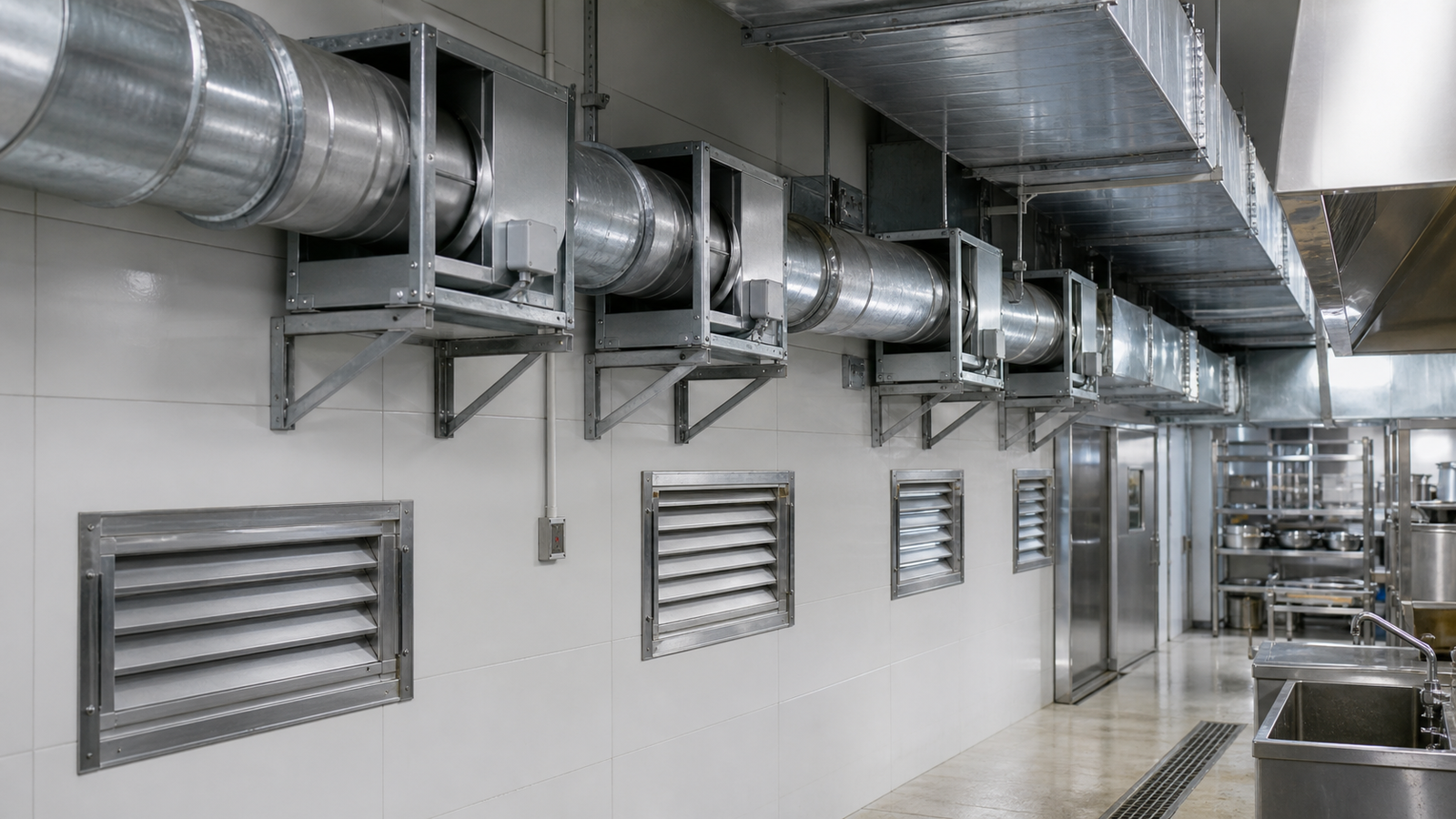

POPULA fan food processing ventilation project planning began with a typical wet-process challenge: a facility’s cleaning and cooking-adjacent areas accumulated warm, humid air during busy shifts. Moisture collected on upper surfaces and windows, the work area felt stuffy, and the existing duct route did not provide a clear, consistent path for humidity to leave the building. POPULA reviewed the general ventilation route and proposed a ducted exhaust arrangement using GDF centrifugal pipe fans, selected for compact inline installation and the static pressure needed to move ordinary humid air through the duct system.
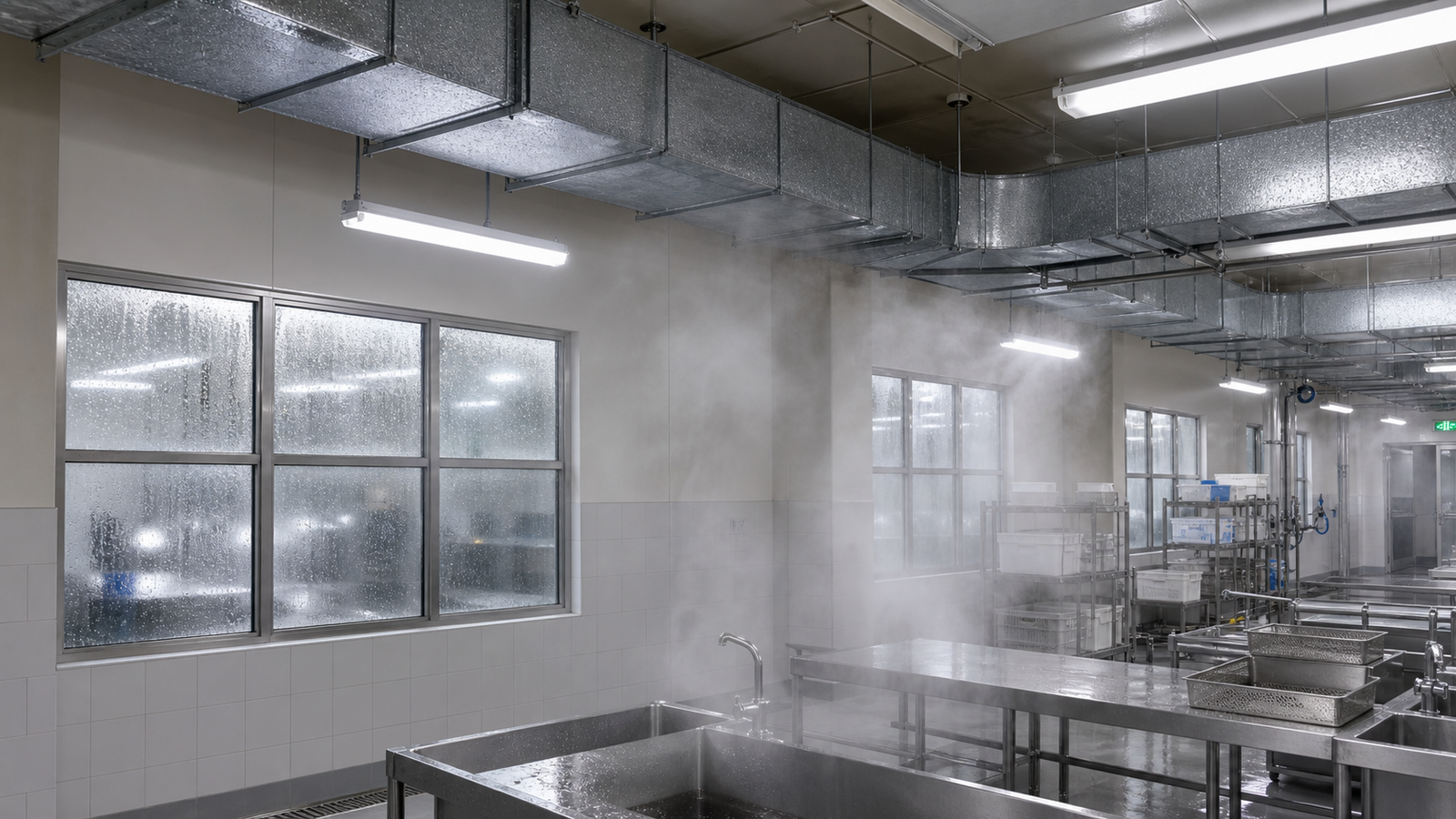
POPULA fan food processing ventilation project application scenario
Wet cleaning, boiling, cooling and frequent wash-down activities can add moisture to a food-processing building even when the facility is clean and well managed. Where humidity is not removed effectively, condensation may form on cooler surfaces and the air can feel uncomfortable for operators. This case addresses general ventilation for normal, non-corrosive and non-sticky air in a food-processing support area. It does not cover greasy cooking fumes, corrosive chemical vapors, combustible dust, fire smoke extraction or a process-capture system that requires specialist design.
The project used the GDF centrifugal pipe fan as part of a ducted general-exhaust route. According to the supplied product information, the GDF series is designed for industrial and civil-building ventilation, directly connects to ducts, and handles non-corrosive, non-sticky air within a -20°C to 60°C temperature range. Actual air temperature, moisture load, material compatibility and local hygiene requirements must always be confirmed for the individual site before model selection.
Why the GDF centrifugal pipe fan was selected
The central requirement was not simply more air movement in the room. The fan needed to overcome the resistance of a practical duct route that included collection points, duct sections, bends, grilles and an exterior discharge path. The GDF centrifugal pipe fan is intended for duct connection and offers the compact installation footprint, stable operation and pressure capability that are useful for this type of general ventilation layout. This gave the project team a more controlled route for humid air than relying on local circulation alone.
Installation conditions were also important. Food-processing support areas often have limited clear wall and ceiling space because of utilities, access paths and washable surfaces. The compact GDF housing made it possible to position the fan close to the duct run while keeping the system accessible for inspection. The final model must still be selected from the project airflow and static-pressure calculation; motor power or fan size alone is not a reliable selection method.
How the duct layout removed humid air more effectively
The ventilation layout followed a simple but disciplined logic: collect humid air near the wet-process zone, guide it through a supported duct route, then discharge it at a suitable exterior point while allowing replacement air to enter the space. Collection points were placed where moisture was most likely to rise and gather, rather than only at the easiest available wall opening. The duct path was kept as direct as the building allowed, with bends and transitions considered as part of the resistance calculation.
GDF fans were arranged at serviceable points along the duct system, with adequate access for checking the casing, motor, fasteners, vibration condition and the cleanliness of the inlet and discharge route. The layout also considered make-up air: exhaust cannot perform consistently if replacement air is blocked by closed louvers, sealed doors or unsuitable inlet positions. This is why POPULA treated the fan, duct, inlet path and maintenance access as one ventilation system rather than as separate items.