

POPULA Fan Highlights Industrial Ventilation Noise Control in Factory Upgrade Planning
Industrial ventilation noise control should be considered alongside airflow, pressure and energy use when a factory plans a ventilation upgrade. A system can move the intended air volume and still create an uncomfortable working environment if noise from airflow turbulence, vibration or poorly coordinated duct components is not reviewed during the planning stage.
For facility teams, the useful starting point is to identify when and where the sound occurs. A steady background sound, a vibration-related noise or a noise that changes when dampers and doors move can point to different parts of the ventilation path. Site conditions, operating schedules and nearby equipment all affect what is heard in a real working environment.
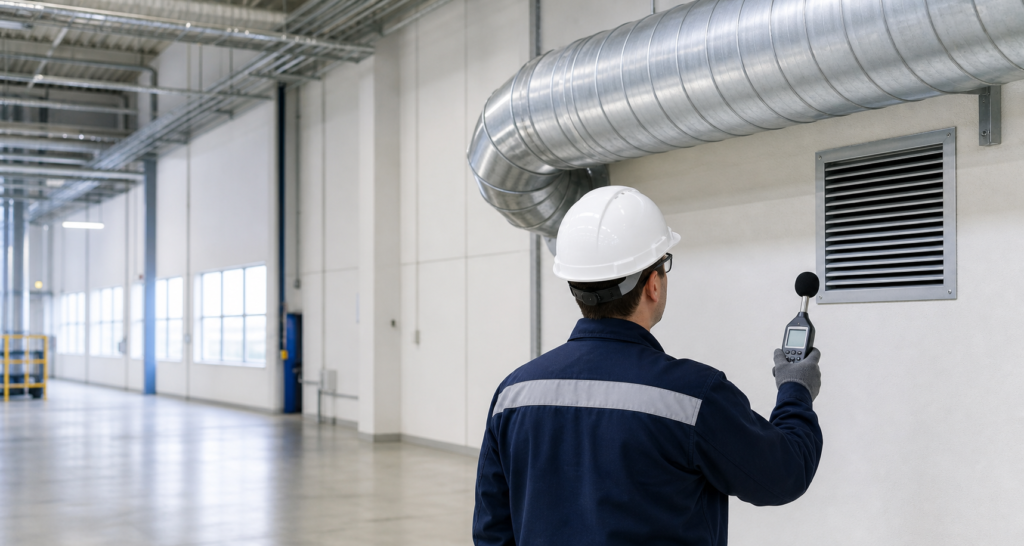
Industrial Ventilation Noise Control Starts with the Airflow Path
Noise does not come from one component alone. It can be influenced by air velocity through ducts and grilles, abrupt transitions, sharp bends, restricted openings, unstable operating points and vibration transferred into building structures. A practical review follows the full path from air inlet to discharge point rather than focusing on only one location.
Before a major upgrade, baseline readings at representative work areas can help distinguish ventilation-related noise from general factory sound. The measurement method, equipment condition and production state should be recorded so future comparisons are meaningful. Where the sound level or character changes unexpectedly, the underlying cause should be assessed before selecting a corrective measure.
Planning Measures That Support a Quieter System
Good system planning may include selecting an appropriate airflow path, avoiding unnecessary high-resistance turns, allowing sufficient transition space, using suitable duct support and reviewing the relationship between the equipment base and the surrounding structure. The final arrangement depends on the application, available space, required airflow and the acoustic expectations of the work area.
From Noise Review to Practical Ventilation Planning
Noise control is most effective when it is considered before equipment and duct routing are fixed. Reviewing airflow demand, static pressure, operating conditions and installation details together gives project teams a clearer basis for evaluating the ventilation approach. It also supports more orderly maintenance after commissioning, because unusual sound can be compared against the original operating condition.
ပေါ်ပူလာ supports industrial customers with product options and project-based ventilation discussions for different airflow and installation requirements. Explore POPULA industrial ventilation solutions or visit the POPULA Fan homepage to discuss an appropriate ventilation plan for your facility.