
How to Read an Industrial Fan Nameplate: A Practical Data Checklist
To read an industrial fan nameplate, first identify which plate belongs to the fan and which belongs to its motor. Record the model and serial numbers, then use the matching fan schedule, performance data and installation documents to interpret the ratings. A motor nameplate describes the motor’s rated electrical characteristics; it does not by itself confirm the fan’s airflow or pressure.
Fan and motor labels vary by manufacturer and model. Some information is printed on the equipment, while duty data may be supplied in a separate schedule or selection sheet. Treat the unit’s approved documents as the source for its actual operating point.
1. Locate and photograph each identification plate
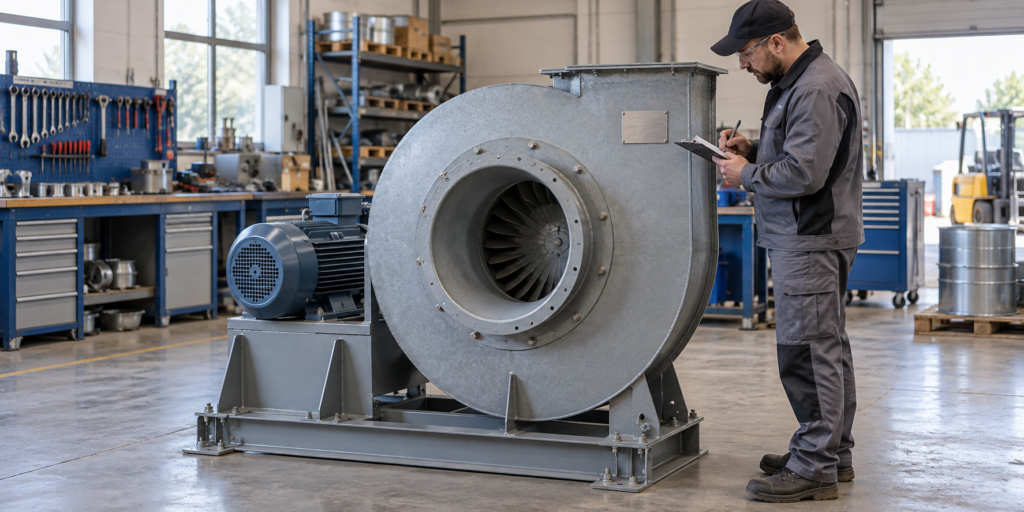
Industrial fan assemblies can have separate identification plates for the fan and electric motor. The fan plate commonly identifies the model and serial number; the motor plate contains motor-specific ratings. Do not assume the two serial numbers are interchangeable. Photograph both plates clearly and keep the images with the equipment record.
If the label is dirty or difficult to read, clean it only with a method suitable for the equipment and site. Do not remove a plate or open an electrical enclosure to find missing information. If a field is unreadable, record it as unknown and ask the supplier or manufacturer to confirm it from the serial number.
2. Record the fan identity and configuration
Start with the manufacturer, fan model, serial number and any job, order or mark number shown. These details help distinguish similar units and are usually the best starting point for finding the correct manual or replacement parts.
Then check the fan schedule and installation drawing for configuration details that may not appear on the nameplate, such as arrangement, rotation, discharge orientation, drive type and included accessories. Confirm these details against the physical unit before ordering a replacement. A model name alone may not describe every project-specific configuration.
3. Read the motor ratings separately
On the motor plate, record every value that is present and its units:
- Rated output: kW or horsepower indicates the motor’s rated mechanical output.
- Voltage and phase: check the listed voltage rating and whether the supply is single-phase or three-phase.
- Frequency: record the rated hertz value; voltage, frequency and wiring arrangement must match the motor documentation and site supply.
- Current: note the full-load current or amperage for the applicable voltage and connection.
- Speed: record rated revolutions per minute (RPM), where shown. This is a motor rating under stated conditions, not a direct airflow reading.
- Other marked data: frame, enclosure, insulation class, duty or service factor may help identify a suitable motor, but interpret each term using the motor manual.
Some motors list more than one voltage or frequency. Read the values as paired ratings and consult the wiring diagram before connection. Do not infer a safe supply or wiring method from a partial plate; electrical checks and changes belong to a qualified person following the motor manufacturer’s instructions and site isolation procedures.
4. Find the fan duty point in its technical documents
Airflow, fan pressure, speed and power at a selected operating point are normally verified from the fan schedule, selection sheet, performance curve or commissioning record. A motor’s kW, voltage or RPM alone does not establish the fan’s delivered airflow. Fan performance depends on the selected fan and the system operating conditions.
When comparing documents, check that the fan model, speed, airflow units, pressure type and units, air conditions and configuration refer to the same duty point. Static pressure and total pressure are different quantities; do not compare values without checking which one is specified. If two records disagree, ask the supplier or a qualified ventilation engineer to resolve the discrepancy before changing equipment.
5. Build a useful equipment record
A concise record for service or replacement should include:
- Clear photos of the fan and motor plates.
- Fan and motor manufacturer, model and separate serial numbers.
- Motor output, voltage, phase, frequency, current and rated speed as marked.
- The approved fan duty point and the document that provides it.
- Installation configuration and any accessories confirmed from the drawing or manual.
- Site supply details and operating notes verified by qualified personnel.
Keep the record with the fan’s manual and site asset file. Before requesting a replacement or service recommendation, share the complete identification and the verified duty information rather than relying on a photograph of one rating alone.
Frequently asked questions
Does the motor nameplate show the fan airflow?
Usually not. The motor plate identifies motor ratings. Use the fan selection data or approved performance documents to confirm airflow and pressure for the intended operating point.
Can I choose a replacement motor from the kW value alone?
No. Confirm the mechanical and electrical requirements, mounting, speed, enclosure and any other application constraints against the fan and motor documentation. Have a qualified person verify electrical suitability.
What if the fan nameplate is missing or unreadable?
Do not guess the model. Check project records, purchase documents and clear photographs of any remaining labels, then ask the supplier or manufacturer to identify the unit from available serial or order information.
For product context, see the centrifugal fan range และ axial fan range on this website. General points in this guide were cross-checked against ABB’s motor nameplate guidance, Greenheck fan installation and maintenance examples, and AMCA fan-rating documentation. Those references explain common identification and rating fields; always follow the documents for the exact fan and motor in front of you.